

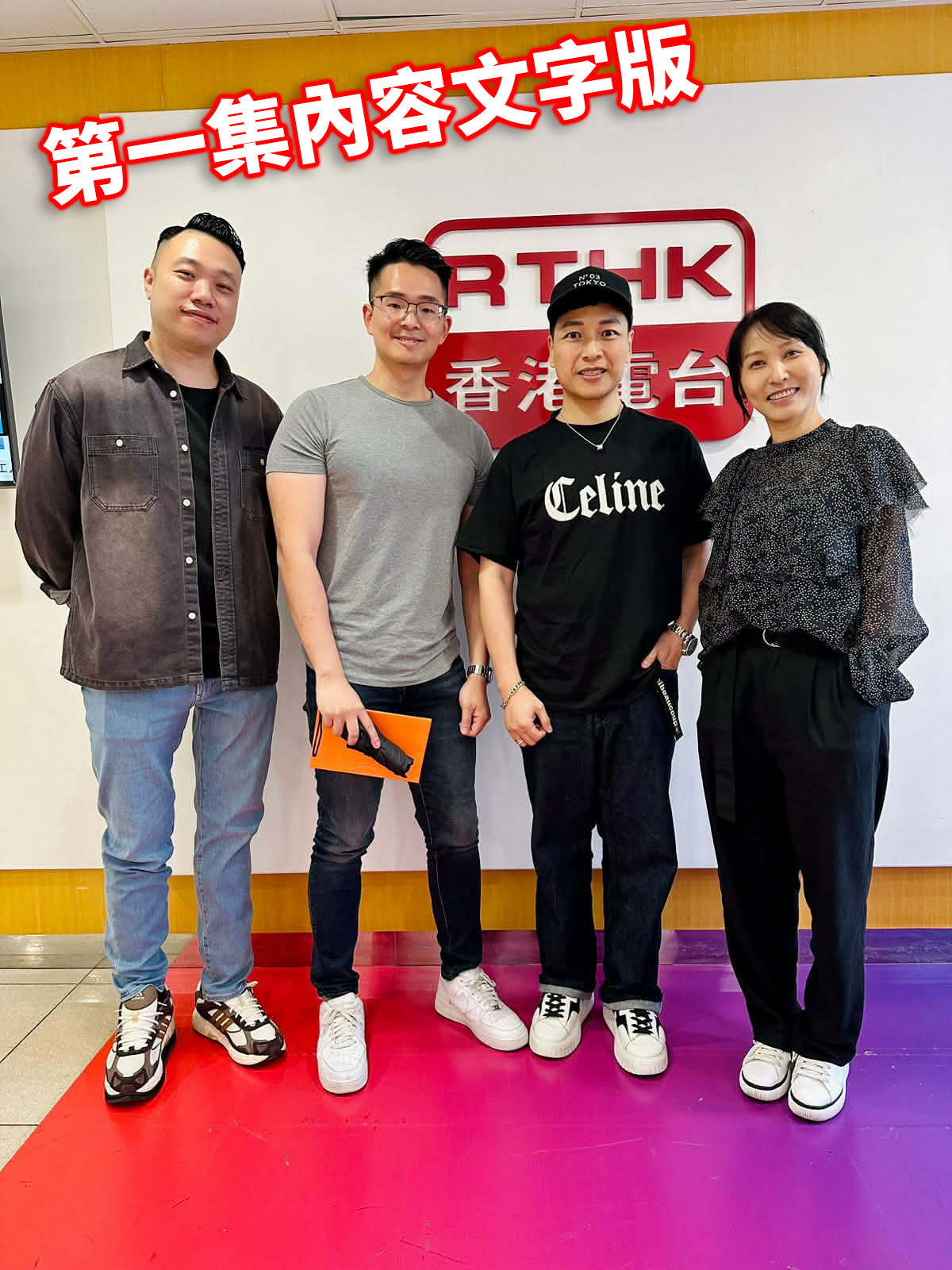
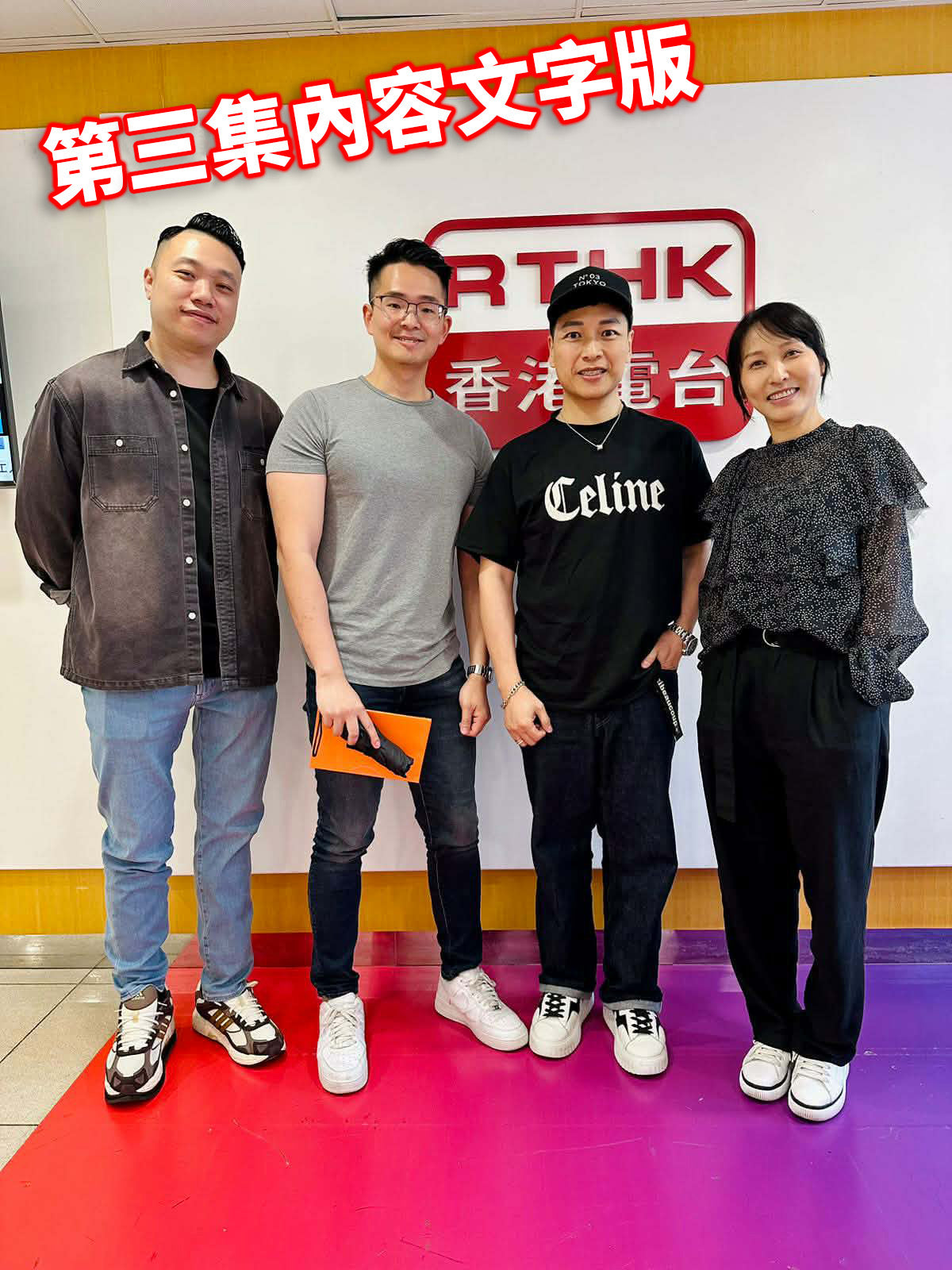
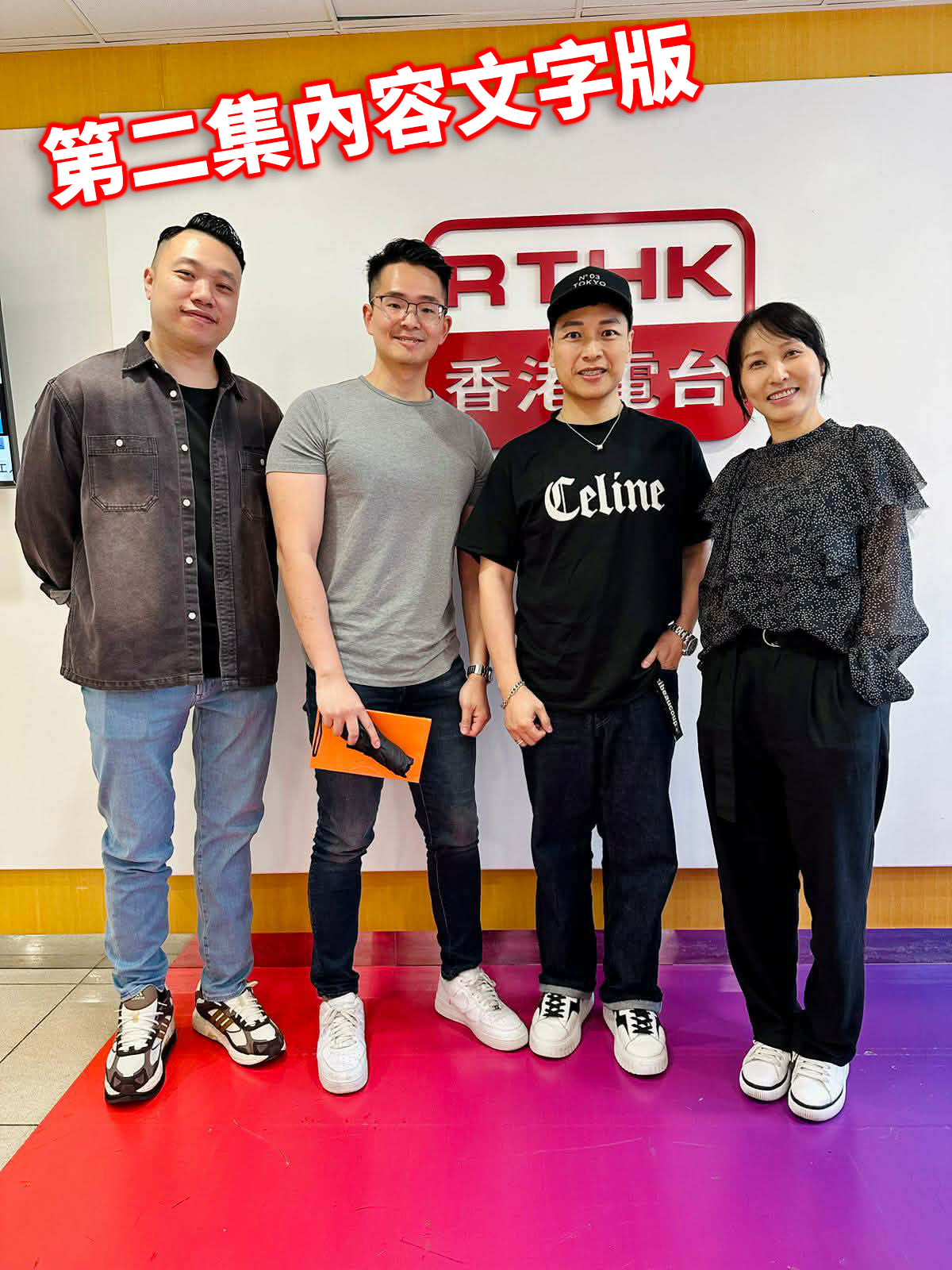
I was recently invited to an interview by RTHK Radio 1's "Hong Kong Living Museum." The interview was broadcast in three episodes. I'm grateful to the hosts for asking such insightful questions, allowing me to share many behind-the-scenes stories that I've never mentioned in previous interviews or online. These include my experience working at a convenience store for my first job, and the struggles I faced a few years after graduation when choosing between entering the legal profession and starting Re Pillow. If you're interested, you can revisit the full episodes on the RTHK website via the links below:
https://www.rthk.hk/radio/radio1/programme/yolo/episode/1096427
https://www.rthk.hk/radio/radio1/programme/yolo/episode/1096694
https://www.rthk.hk/radio/radio1/programme/yolo/episode/1096931
I understand that it's sometimes inconvenient to listen to programs or that online replay links may expire after a while. Therefore, I've transcribed the content of Episode 1 below:
RTHK Hong Kong Living Museum - Hong Kong Expert Interview - Episode 1 Transcript (04/05/2026)
Gary Tam Wai Kuen: Today, our guest is someone each of us really needs.
Leung Lai Kan: I think among the three of us, I'm the one who needs him most.
Daniel Chan Ho Yuen: Why do you particularly need him?
Gary Tam Wai Kuen: Are you looking to find your roots?
Leung Lai Kan: Exactly. I want to ask our guest, where is your ancestral home? That's the first question.
Ryan Leung Lai Hang: I was born in Hong Kong, my ancestral home is in Shunde.
Leung Lai Kan: You got half of it right, because my mom is from Shunde.
Daniel Chan Ho Yuen: Ha, I thought you were going to say you're a very "shùndé" (compliant) person, you were trying to make a pun. You like doing that.
Leung Lai Kan: I'm serious, Mr. Chan. My mom is from Shunde, so that's half right. Why ask about ancestral homes? Because my name and the guest's name only differ by one character.
Gary Tam Wai Kuen: They really only differ by one character!
Leung Lai Kan: Also, his name's pronunciation is the same as my dad's name's pronunciation, only the writing is different.
Daniel Chan Ho Yuen: Aren't you truly scaring our guest!
Leung Lai Kan: He's really surprised right now...
Gary Tam Wai Kuen: The guest's face has turned red!
Leung Lai Kan: Introduce, introduce...
Gary Tam Wai Kuen: Today's guest is a bedding expert, his name is Leung Lai Hang, Ryan, hello.
Ryan Leung Lai Hang: Hello, hello.
Gary Tam Wai Kuen: Let me introduce first, this is Leung Lai Kan...
Daniel Chan Ho Yuen: Your pronunciation is so accurate, I'm Daniel Chan Ho Yuen.
Leung Lai Kan: At first, the producer told us, "Why don't we look into some bedding?" I thought, bedding? I started to think about myself, am I very particular? I wasn't before. When I was little, my mom's idea was "if it works, it works" . But as the world moves forward, constantly improving... and also, the older you get, the more particular you become. Are you two the same way?
Gary Tam Wai Kuen: Absolutely. When I was little, I slept on a hard pillow, my grandma had me try it, an ancient hard pillow (Kan: Ancient people were really something) leaning against it, hard. Then I realized, wow, it was pretty hard. Then I started buying some very cheap, very good ordinary pillows, and as I got older, I started looking for many different types of pillows, I've tried many brands of pillows...
Daniel Chan Ho Yuen: I really want to specifically ask our guest, when we were little, we slept on any pillow and our necks were fine. But as we grew up, the more particular you become, the more problems you have. We started trying different pillows, there's memory foam, there's different sizes, there's curved ones...
Leung Lai Kan: The middle of the pillow is also sunken in...
Daniel Chan Ho Yuen: The more particular we become, the more times we wake up with a stiff neck. Is it related to age?
Ryan Leung Lai Hang: I think it definitely has something to do with age. When we were little, we had fewer worries, a person is happy, happy and goes to sleep with a smile. But when you think about going to work tomorrow, with all sorts of worries, it actually has an impact. Furthermore, the pillows on the market now are varied and strange. Sometimes I feel that if we go back to the basics, it might be better for a person, because a person's sleeping posture and position are not fixed. (Kan: Constantly turning over.) If your sleeping posture is very fixed, truly lying down, and that posture is perfect. It matches the pillow. However, at night, you might turn on your side or something else, I think these are truly real things that happen. After closing your eyes, no one knows how their posture will change, so it's possible that if you sleep awkwardly or elevate yourself too much in one spot, you'll wake up feeling uncomfortable the next day.
Leung Lai Kan: Ryan, when you were little, do you remember what kind of pillow you slept on?
Ryan Leung Lai Hang: I slept on very ordinary, stuffed cotton pillows.
Leung Lai Kan: Mine was also cotton, and so was yours.
Daniel Chan Ho Yuen: But you used a hard pillow.
Gary Tam Wai Kuen: I slept on a hard pillow for a period, then switched to, I think, cotton. Our generations are similar... Yes, I'm the same as Ah Yuen... Haha.
Daniel Chan Ho Yuen: When I used it, it was already chemicals (synthetic cotton), not pure cotton.
Leung Lai Kan: But I remember another type of pillow that I really liked, but it disappeared after I grew up. That was the emblic leaf (amla) pillow. Are there still such pillows now?
Ryan Leung Lai Hang: There are fewer and fewer now.
Leung Lai Kan: Emblic leaf pillows, you don't know?... You can't possibly not know.
Daniel Chan Ho Yuen: Is emblic a person or a leaf?
Leung Lai Kan: It's a leaf, called emblic leaf, the plant should be called emblic.
Gary Tam Wai Kuen: I know, I know. My great-grandmother wasn't very familiar with it either? (Yuen: Ha... did they disappear after the Ming Dynasty? ) When she got married, it was part of her dowry, some pillows were beautiful, with red covers. Pillows from that era must have been made from emblic leaves.
Leung Lai Kan: What I want to say is this? When I was little, I had a small emblic leaf pillow that I used to hug when I slept. It was very cool and made a rustling sound. Because it was all leaves inside, when you moved it around, it rustled, and children loved hugging it to sleep. Let's see how the guest answers, what is this?
Ryan Leung Lai Hang: However, I saw this pillow a few years ago in a Chinese department store, but now there are probably fewer Chinese department stores in Hong Kong, so it's likely really gone now. But you just mentioned that the pillows were very small. This is actually a common reaction I hear from many customers, as Daniel also mentioned earlier, pillows used to be simple but now they are getting bigger and bigger, making them all weird. One reason, although it may not be applicable to everyone. However, modern pillows are getting larger or higher, seemingly with ideal shapes. But after you toss and turn, and if the pillow is too large or too high, when your neck moves, you might lie on a certain corner or edge, which could "jam" your neck in certain positions, some people may be more sensitive. But if the pillow is relatively smaller, you won't get "jammed" as much if you roll off, on the contrary, a smaller pillow may be more suitable for most people. The chance of getting a "stiff neck" will be smaller.
Daniel Chan Ho Yuen: All of us hosts say that, when we were little, we didn't really care about some bedding. But I know Ryan you come from a bedding family, you grew up surrounded by pillows, quilts, all sorts of bedding? Were you already very particular when you were little?
Ryan Leung Lai Hang: Of course not when I was little. Actually, my mom at home was just like everyone else (haha...) all moms are the same, they'd just take the old, factory rejects and use them. That's how it was because these goods wouldn't be sold. Anyway, they were for our own use, if they had a little stain or a hole, that's what we got.
Leung Lai Kan: It wouldn't affect its practical use, but it shouldn't be sold. Exactly, that's right, no reason to waste it.
Daniel Chan Ho Yuen: My dad used to make jeans, and he'd give me jeans with the tags cut off. I think it's the same principle.
Music...
Leung Lai Kan: We have many questions, Ryan also has many of your professional analyses to share with us. That's right, we'll first analyze Ryan personally, let's scan you first. You come from a bedding family, but did you do any other work when you were little?
Ryan Leung Lai Hang: My first job was working at a convenience store. It was after my DSE exams, a summer job. But that job actually taught me something. Working at a convenience store, you could say how much it cost, then just check them out. But sometimes you could chat with people or whatever, and I gradually realized a principle that I find very useful in my work now. The relationship between merchant and customer isn't just about buying and selling. Sometimes, they want these things, or they want to buy those things. But if we don't have those items in stock, how can I help them? Or can I ask the manager when the items will be in stock for them? Sometimes, taking an extra step can make the customer's experience better.
Leung Lai Kan: Taking an extra step, good customer service! It reminds me of Louis Koo, ha, but honestly, not everyone does that. Was this convenience store job a part-time job?
Ryan Leung Lai Hang: Part-time, yes!
Leung Lai Kan: A part-time youngster, purely just: I want a salary only, I just want more pocket money, I'll leave when I'm done. And you'd really think an extra step?!
Ryan Leung Lai Hang: I think it makes customers happier. I also go shopping, watch movies, eat, and buy things outside. Why do we think merchants are greedy? If merchants start from the customer's perspective and think a little more, merchants can actually stand on the same side as customers. Just like when I later started making pillows, I also started from my own perspective. If I were the customer, what would I want the pillow to be like? And not, let's make a product and then make money...
Leung Lai Kan: Or we make high-tech stuff, from space, I don't know what, making it very exaggerated... Better than that. Okay, so in that convenience store job, did you have to tell customers, "add 5 dollars and you can get this and that?"
Ryan Leung Lai Hang: Yes, it was company policy, you had to say it.
Leung Lai Kan: You had to tell every customer?
Ryan Leung Lai-hang: Every customer, when checking out, besides the items they are buying, you also need to say something, about selling the items in front of the counter.
Leung Lai-kan: But there's no rule that you have to meet a sales quota, like how much you need to sell in a day or something?
Ryan Leung Lai-hang: No, there isn't, but you must mention it.
Leung Lai-kan: Oh!
Daniel Chan Ho-yuen: We just heard Ryan say that even though it was a part-time job, a part-time position, your mindset was not part-time at all. Because you were already thinking, "How would I do this full-time? What can I learn from this?".
Leung Lai-kan: I think he's like an entrepreneur who wants to open his own convenience store.
Daniel Chan Ho-yuen: So, for your second job, did you immediately create your own brand, or were there other jobs in between?
Ryan Leung Lai-hang: Actually, like many university students who grew up in Hong Kong, I studied law at the University of Hong Kong. Back then, of course, I would do internships at law firms. I originally intended to work in this industry and develop here, study and further my education, and so on. But unexpectedly, an epidemic gave me a little more time, and then I felt that the pillows at home were not satisfactory. After that, my life took a different path.
Gary Tam Wai-kuen: Completely two very different paths.
Leung Lai-kan: But from those law firm internships, did you learn anything hands-on? Do you feel it helped your life, or your subsequent business? Did you?
Ryan Leung Lai-hang: I think so, the pursuit of meticulousness. Their work is about the pursuit of meticulousness. When I worked there, I thought it was normal, but after I started working, I saw that perhaps other peers, or various industries, didn't necessarily pursue meticulousness in their work. They would just do something, deliver the goods to the customer, and that was it. (Kan: Yeah!) Perhaps because it was a law firm, they were very meticulous. Even if I couldn't become a lawyer, if I did half of it, it might already be considered relatively meticulous in the industry.
Gary Tam Wai-kuen: So you were an intern, but you didn't officially follow a mentor or develop...
Ryan Leung Lai-hang: No.
Daniel Chan Ho-yuen: Ryan, did you hear that just now? When it came to details, our host, Ah Kan, immediately said, "Yeah!". Because she often has a catchphrase, "Doing it doesn't mean doing it well."
Leung Lai-kan: Ryan, do you know that some former Hong Kong representatives who went out to play ball were like that? Every move had to be perfected... to the extreme.
Daniel Chan Ho-yuen: Extreme!
Leung Lai-kan: Extreme, otherwise it's hard to win... ha.
Daniel Chan Ho-yuen: That's right, as athletes, we often have to first ask our parents if they agree, because we're afraid they can't support the family. Is it better to follow the path we originally studied? You're a law student. When you told your family that you were going to make a big splash in the bedding world and create your own universe, did they say, "Son, that's not good," as law seems to be more of the path people imagine.
Leung Lai-kan: And think about how long you've studied, you've wasted it. Do you have such thoughts?
Ryan Leung Lai-hang: Yes, I have that thought myself. First of all, it's not about making a big splash, but I started doing it while I was studying. At that time, I made (pillows) for my own use and didn't think about continuing. Anyway, the job was already settled, and the employment contract had already been signed with the law firm. It was with a certain law firm, and after graduation, they would formally hire me, and I would go to work there. My family would think, "You're just playing around, making pillows is just your side hustle." But in terms of studies, first, you have to prioritize. I remember them saying that your academic performance must be achieved and done well. Once that's settled, after graduation, how do you go about your path? My family also thought, "Do you need to think about it more?" But in the end, they understood it was my decision, and I think they gave me a lot of freedom to try.
Daniel Chan Ho-yuen: But do you have siblings?
Ryan Leung Lai-hang: Yes, I have a younger sister.
Leung Lai-kan: I think this is a matter of trade-offs ( Hang: Yes, that's right!) The law firm has already hired you. Yes, you can probably see that if you go in the direction of a law firm or the legal profession, that path is already there. How you end up walking that path is another story. You've opened up a wide road, but you're turning back and going in a different direction. Did you struggle?
Ryan Leung Lai-hang: Yes, I did. Graduation was around July, and I set a goal in March or April. I was very worried that all of this was just "a flash in the pan," that something might be "hot" for a period, for example, the pillows were selling very well, but could it continue afterwards? Would it be as you just said, that the path to becoming a lawyer has already been somewhat established, it's a path that millions of people have already walked. I set a goal in March or April, which was that if I saw the business was still good in July or August, I would continue with it. That being said, you can ultimately decide not to.
At that time, I had a thought: if I were to become a lawyer, although it sounds very self-indulgent, I sometimes feel that the world wouldn't be much different with one more lawyer, nor would it be much different with one less. Many people can do what a lawyer does. In terms of academics, I was just average; not terrible, but not the best either. The legal profession is something that can be done, solved, and daily tasks can be handled. But it's very likely that if Hong Kong had one less lawyer like me, it wouldn't really matter. Of course, you might ask if I'm amazing at making pillows. Would the pillow industry fail without me? Do I have to be the one to do it for it to be done? No. But I would feel that perhaps some things in the industry are not dared to be tried. There need to be some people who are unburdened, to let them do it. They really break the rules, and then they will do it. So I think, instead of thinking about the future of a lawyer, or the salary, or various other things being better, I would rather think, "Is what I'm doing something that might contribute a little bit to society?" Even if it's just a little, or even if it fails. Contributing to society is what you think, because no one cares. But why aren't adjustable pillows very common in the market? Of course, there are reasons for that. But I want to try this, try to see if I can create problem-solving products from a user's perspective.
Daniel Chan Ho-yuen: Ryan, you just said you want to change the world a little bit, and it's best if you have no baggage, so you can go for it, and then put your philosophy into your product. But as your entrepreneurial years pass, or as you continue to do it, from having no baggage, you will start to have baggage, including family pressure, your future, this industry, and so on. Have you set a time limit for yourself, that if it doesn't work out by then, you might go back to a law firm? Or reconsider?
Ryan Leung Lai-hang: Actually, I don't think I can go back. I can't go back because I've already stepped into this industry. If I stand in the shoes of a law firm owner, if I hire you, and you haven't done legal work for five or six years. Looking at other young people who just graduated from university, they were still taking this exam last week, their minds are still thinking about what laws, etc., why would the boss hire you? Also, at your age now, between training you and training a young person, who would have a better future in the company? To be honest, I can't go back. But my personal view is, whether times have changed or I'm just being wishful, it's not necessarily achievable. I can simply find a regular job, with an average monthly income, and I wouldn't mind that kind of life. Because I live a simple life; I don't have to be rich or make a fortune.
Leung Lai-kan: I think that in your past work in the bedding industry, you must have gained a lot of satisfaction, had many happy moments that further motivated you to keep moving forward. So... why do you say "I can't go back"? I think besides saying that you're not in the thick of it, and you're moving further and further away from the legal profession, that you can't go back. Actually, what you have now is enough to keep pushing you forward, can we say that?
Ryan Leung Lai-hang: I enjoy what I do. Actually, I've been thinking recently about how to balance work and life. My initial thought was to dedicate all my time to work, but it turns out that's unfair to those around you, including your own parents or others. You need to find some balance in life. Perhaps on certain days, you really need to spend time with family, really need to spend time with your wife, because I genuinely enjoy solving problems. Why not? Is there a way to make the current product better? I enjoy this process.
Music.........
Leung Lai-kan: Leslie Cheung's pillow. I really like doing radio, because... what are you two laughing about?
Daniel Chan Ho-yuen: What do you like? Do you like pillows? Or do you like me and Brother Gary first? Or do you like Leslie Cheung's song first?
Leung Lai-kan: I like doing radio because I can interview many different people. I've been talking the whole time while listening to the interview.
Gary Tam Wai-kuen: Didn't you just say that?
Leung Lai-kan: Yes, haha...
Gary Tam Wai-kuen: ... So, he knows how to do radio very well, he clearly distinguishes between what's on mic and off mic, and he's quick-witted...
Leung Lai-kan: Don't say that, it's all deliberate cultivation... ha. Off-mic is always the most exciting, I'll tell you later. Today, we listened to the first episode of our bedding expert, my friend, Hang Jai, Leung Lai-hang Ryan, Ryan's interview. I found it very interesting. Starting from a convenience store, he developed that heart to serve the public; I think this is very interesting.
Daniel Chan Ho-yuen: Yes, and you wouldn't expect that a young man, a youth, when working at a convenience store, he was already thinking about having his own shop. Yes... When he was at the convenience store, he was already thinking about having his own business. I think this young man is really ambitious.
Re Quilt 4 is now available
RTHK Hong Kong Museum of Lifestyles Hong Kong Experts Interview Series 2 Transcript (05/05/2026)