

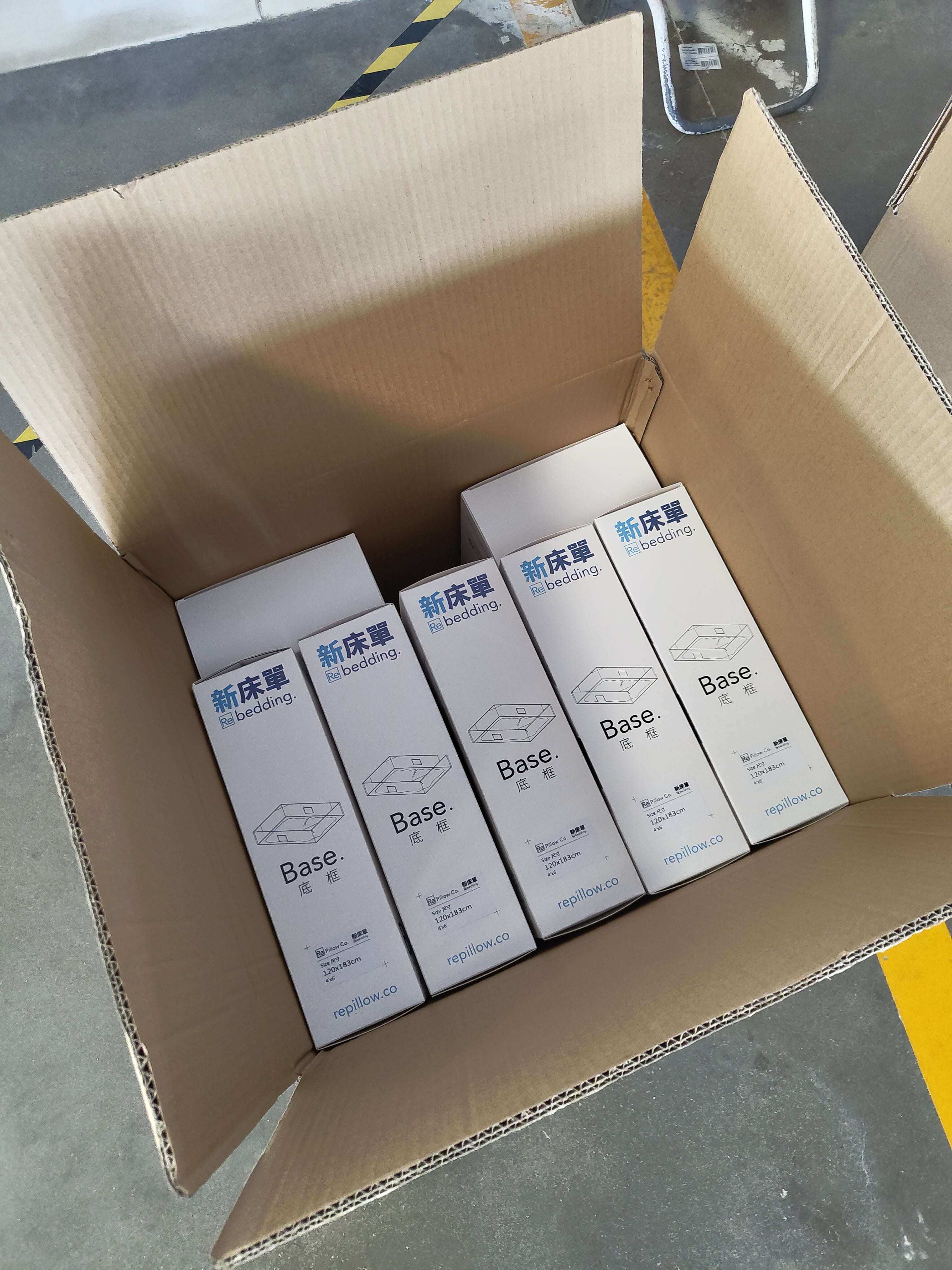
Welcome to this week's journal, where I'll once again share my work from this week. I spent the entire week at the Guangdong factory handling the production of "Re Bedding," away from Hong Kong. Since globalization, in recent decades, companies worldwide have increasingly moved production out of their home countries, providing consumers with more affordable and high-quality products to cope with increasingly fierce global competition and a growing consumer market. This is indeed understandable. In this journal entry, while I'm at the factory in Guangdong, I'd like to discuss the potential problems of this "production relocation" trend and offer my personal insights.
With fierce market competition, it's understandable that major companies want to move production out of the country (in the case of Re Pillow Co., it's partial production; I still keep the pillow production line in Hong Kong, but due to limited space and manpower, new products need to be produced elsewhere as the product line expands). Moving production out to reduce labor and land costs, and even improve product quality to achieve "high quality at a low price," should be easy to understand, so I won't discuss that today. What I want to talk about is the impact of production relocation on product design and R&D.
I've only been in business for a few years, so my experience is limited. However, in my work, I believe the closer the factory and design departments are, the better. I think this is the reason Re Pillow Co. was born. I tried designing at home, immediately assembling and sewing the materials together to create prototypes. I acted on my ideas as soon as they came to me, which led to the first Re Pillow. Gary Vaynerchuk once said, "Ideas are worthless without execution." If you have an inspiration, it's best to try it immediately. However, because factories have been split up and located in other countries in recent decades, the process of turning an idea into a product has become difficult. Company designers have to communicate with the factory and coordinate ideas with everyone, making the whole process more challenging and hindering innovation and good products. Previously, designers could physically handle the materials, place them in front of the machines, and create prototypes within a day or a few days. Any shortcomings could be corrected immediately. Or, during the production process, because the designer was also involved, they might have new inspirations to improve the product, making creation easier. That's no longer possible. Designers can only draw and imagine. To actually do it, they have to communicate with factories in other countries, and those factories may not have enough time to pay attention and help them test things out. I think this is detrimental to human development.
In fact, while our lives have improved significantly in recent decades, and many countries around the world are wealthy enough that daily necessities and food are readily available, companies seem preoccupied with catering to consumer demand and engaging in various forms of advertising and marketing. Genuine product innovation has indeed decreased considerably. Many new products have been introduced, but most are merely routine updates, with few groundbreaking developments. Innovation is not absent, but compared to other periods in human history, our era has seen far less innovation. I believe this phenomenon is more or less related to the relocation of production overseas.
Ideally, factories and companies should be located in the same place, but given the intense competition in today's society, this may not be feasible. Therefore, as a second-best option, proximity is preferable, and frequent interaction between the two is beneficial. Designers also need to understand the feasibility of each decision in terms of production, identify any difficulties, and discuss solutions openly and frankly. This is essential for progress. Designers also need to learn some basic production skills, such as materials and sewing, as I have done, and be prepared to try making samples themselves. They need to find a way to execute ideas readily, which will benefit human development. I see far too many companies in the market that are "resting on their laurels," focused solely on making money. Their so-called "innovation" and "patents" are nothing more than marketing tricks, never contributing to a better life or progress for humanity. Therefore, I wanted to write this article to discuss this issue. Because development doesn't happen on its own; it requires our effort.
#073 The final straight path of Re Bedding, the meaning of weekly journals, a small review of the past year (22/10/2023)
#075 I'm not writing a weekly journal anymore (05/11/2023)