

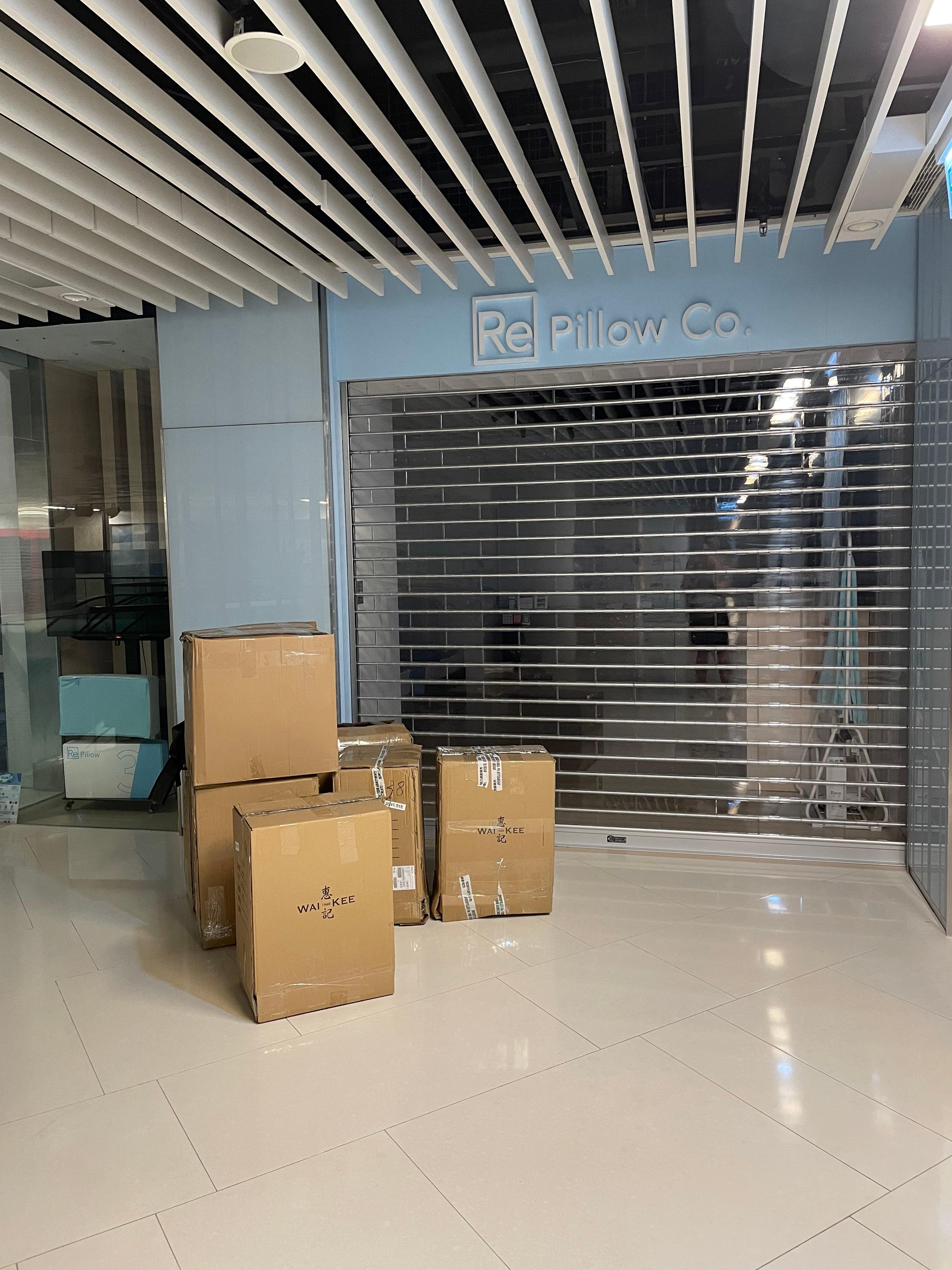
Hello everyone! It's that time of the week again to share what happened at work. This week we restocked our new Re Bedding sheets and also restocked the matching Re Pillowcase 2. Since I know that the people who wrote this week's report are all quite high-caliber, I might as well talk about work-related things here, and go into more detail if you want.
This week, I'd like to use the opportunity of restocking Re Bedding to talk about inventory management. In the past week alone, we experienced stockouts of Pro Add-ons and Re Bedding that were out of stock for extended periods before being restocked and put back on sale. As a bedding company, Re Pillow Co. currently has a relatively small product range, with only about ten items, but inventory management is still challenging, and stockouts occur frequently. This is something I'd like to share with you.
Thinking about it carefully, each product has many accessories, such as zippers, buttons, hang tags, packaging boxes, stickers, fabric, etc. If even one is missing, production will stop. The problem is that managing the inventory of these materials is also my responsibility, and sometimes I might miss some. Some people might ask, "There are dozens of different materials, why not just prepare a larger quantity of each at once?" The answer is simple: as long as you have enough materials on hand, you won't run out when you need them!
Yes, the above methods are certainly feasible, but there are three major problems: (1) With the size of our company, we do not have enough funds to prepare a large amount of materials for production; (2) If we always prepare a large amount of materials that are ready at any time, if we want to improve the product, we may need to change to other materials, and we will face a choice: discard a large amount of materials that have been prepared? Or wait until we have used up all the large amount of materials on hand (which may take a long time) before we start production? The flexibility will be greatly limited; (3) Land issues. Preparing a large amount of materials that are ready at any time will not only require a lot of funds, but also a lot of land, which is also a cost. In the end, it will be passed on to consumers, which I do not want.
These issues are probably easy for everyone to understand. The ultimate answer is to find an optimal balance of inventory—a point of no more, no less. Furthermore, it's crucial to establish a system within the company to prepare in advance when certain indicators suggest potential future stockouts, thus preventing such situations. Currently, the goal is to anticipate demand as early as possible, assess current demand, forecast future sales, and prepare inventory and materials accordingly. The inventory shouldn't be too much or too little; ideally, it should be just slightly more than demand, ensuring neither stockouts nor overstocking. This requires great care and meticulousness, constantly tracking everything from production to sales. Frankly, at this stage, it's sometimes difficult to predict sales, as we're still relatively new and learning the ropes. Conversely, many customers are hearing about the brand and Re Pillow Co. for the first time. Therefore, compared to a well-established and stable company, there are fewer historical precedents to reference when budgeting inventory, further increasing the difficulty. In this regard, we've made considerable progress in recent years, but we're still working on it.
#091 A small incident at the store (25/02/2024)
#093 Filming focuses on inventory management, authentic kung fu, the style of Re Pillow Co., and a cable TV news interview (10/03/2024)