

This week I'll talk about product planning, our past practices, our current practices, and our growth.
Let me first talk about my previous approach, or rather, before 2022, because at that time I basically had no product planning. I was just trying to make some products I wanted to use while I was studying, so there was no plan whatsoever; I just did what I wanted. If I remember correctly, back then I only had one pillow, two pillowcases, and two blankets, one for winter and one for summer—that was all. It was a very basic product line. Frankly, because sales were low, and the main product was actually the pillow, nothing else was the main focus, I didn't spend much time researching products back then. Now I'm much more serious. In 2022, at the beginning of the year, I received some media interviews, which made me start to grow, and it seemed like I needed to have some planning.
The products launched in 2022-2023 were not well-planned. If anyone recalls, we launched a perfume product in early 2023, which, looking back now, was completely unrelated to our core business. Of course, we didn't think much about it at the time; a good friend was doing it, and we thought it was fun, so we joined in, also doing some good deeds in the process. However, you can see that I had no plan back then; the product just came out on a whim, without any plan for the next year or anything like that, and there was no underlying logic to what we would do and what we wouldn't. By mid-2023, business was facing significant difficulties, which made me even more determined to work harder. Around that time, I became very busy, living a fulfilling and hectic life every day. In early 2024, I became even busier because a colleague left. However, it was also during this busy period that I began to understand my business better and started to make some plans on how to do it. Products began to be arranged, and this became more obvious from the middle of the year to the end of the year. I believe it will be even more obvious by 2025. Products will have a timetable and arrangements, and there will be reasons for these arrangements. We hope to do better and better step by step.
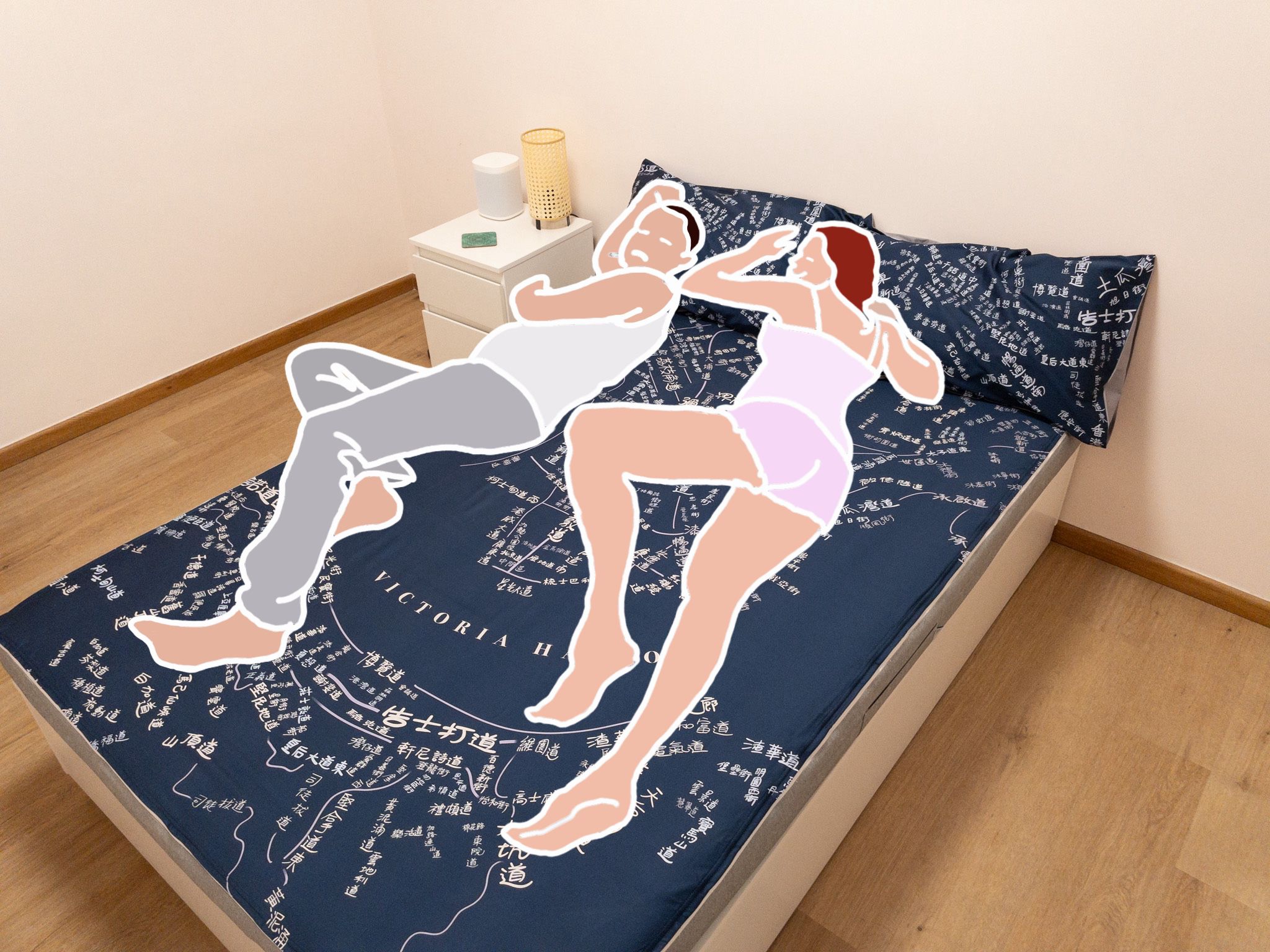
Another duvet cover will be released at the end of the month, so stay tuned.
After releasing the duvet covers, we finally completed the entire bedding category after four years: pillows, duvets, sheets, pillowcases, and duvet covers. Everything was complete. Some companies finish quickly, but they use conventional designs and don't have many ideas for how to modify them. We, however, followed our own pace, finishing only what we needed, and after four years, everything was finally released.
First, let me clarify: some people might think this is arguing about mattresses, but mattresses are not included. Traditionally, although many companies now include mattresses when making bedding, mattresses were traditionally made by separate companies. When we make bedding, we're referring to the textiles, like pillows and blankets; mattresses aren't included. I hope everyone can join me on this journey and see how far we go. (That means I'm asking you to buy some things... haha, but you can proudly tell your friends that you're a great starter, that you were already one of the initial supporters when Re Pillow only had a few stores.)
Many people fail on their first or second startup, and most succeed on their fourth or fifth project. This isn't meant to discourage aspiring entrepreneurs, but it's a fact that the data shows, and you need to be mentally prepared. Otherwise, you'll easily give up after your first failure when you encounter difficulties. Of course, I'm no exception; I only achieved Re Pillow after my fourth or fifth passion project.
In the beginning, don't be afraid of failure! If you have an idea, try it out. Rest assured, there's a high chance of failure, but my advice is that you should try to fail as much as possible in a short period of time, and the road ahead will be relatively smoother.


#129 A brief review of 2024 and what I learned (17/11/2024)
#130 Dustykid(R) Collaboration Series Officially Launched (01/12/2024)