

This week, I had dinner with a friend who is also an old acquaintance in the bedding industry. He holds mid-level management positions in several large bedding/mattress companies. Due to privacy concerns and my desire to protect my friend, I won't disclose any content that is too personal or would allow people to guess who he is. However, sometimes chatting about work, discussing ongoing projects, and future plans is actually quite good. Some people think of competitors as enemies, and I used to think that too, but gradually I've come to see it differently. Many might think their opponent is the person across from them – if they make more money, you'll make less. But often, your true competitors are not the peers you see. For example, there were once many bookstores in Hong Kong. At the time, bookstores might have considered other bookstores to be their rivals. However, their real competitors might not have been other bookstores, but rather internet information, attractive YouTube content, and so on. They were not the competitors they originally imagined. It was useless for the bookstores to fight amongst themselves and despise each other; time swept them away, and they vanished in the torrent. So, sometimes, if your thinking and competition are still confined to the same circle, it might be too narrow. If you can broaden your perspective on this, I think many things are actually trivial – success or failure, who does what, everything is quite insignificant.
I've recently started to understand why scale is important. Everyone knows that traditionally, we haven't been associated with "scale"; we are just a very small company, always wanting to enter the mainstream but never quite making it. However, as I've continued working, I've increasingly realized the importance of scale. This is because there are many things, like "Re pillow," which I spent a lot of time developing, and many companies our size wouldn't bother with such things. But I genuinely put in serious effort. Similarly, there are more internal systems. These systems are built once, and then basically used as-is. It would be even better if there was more business, as it would be more cost-effective to build it once and then have high enough usage. If the usage is not high, then it means a lot of investment for little return, which is, of course, not cost-effective. I think you understand. However, regarding this scale, I personally don't think it's about infinitely increasing, bigger is better. There's a point where it becomes "enough." Because beyond a certain size, it brings problems and troubles that are not proportional to the effort, and therefore, there should be a "prime" state at a certain scale that is best. When you reach a certain scale but haven't become too large, that "prime" state should allow for scaling up or down according to the situation, and the general cost structure can be maintained proportionally. That's what I would consider a "comfortable spot." And of course, we haven't reached it yet. I call my current state... "still striving."
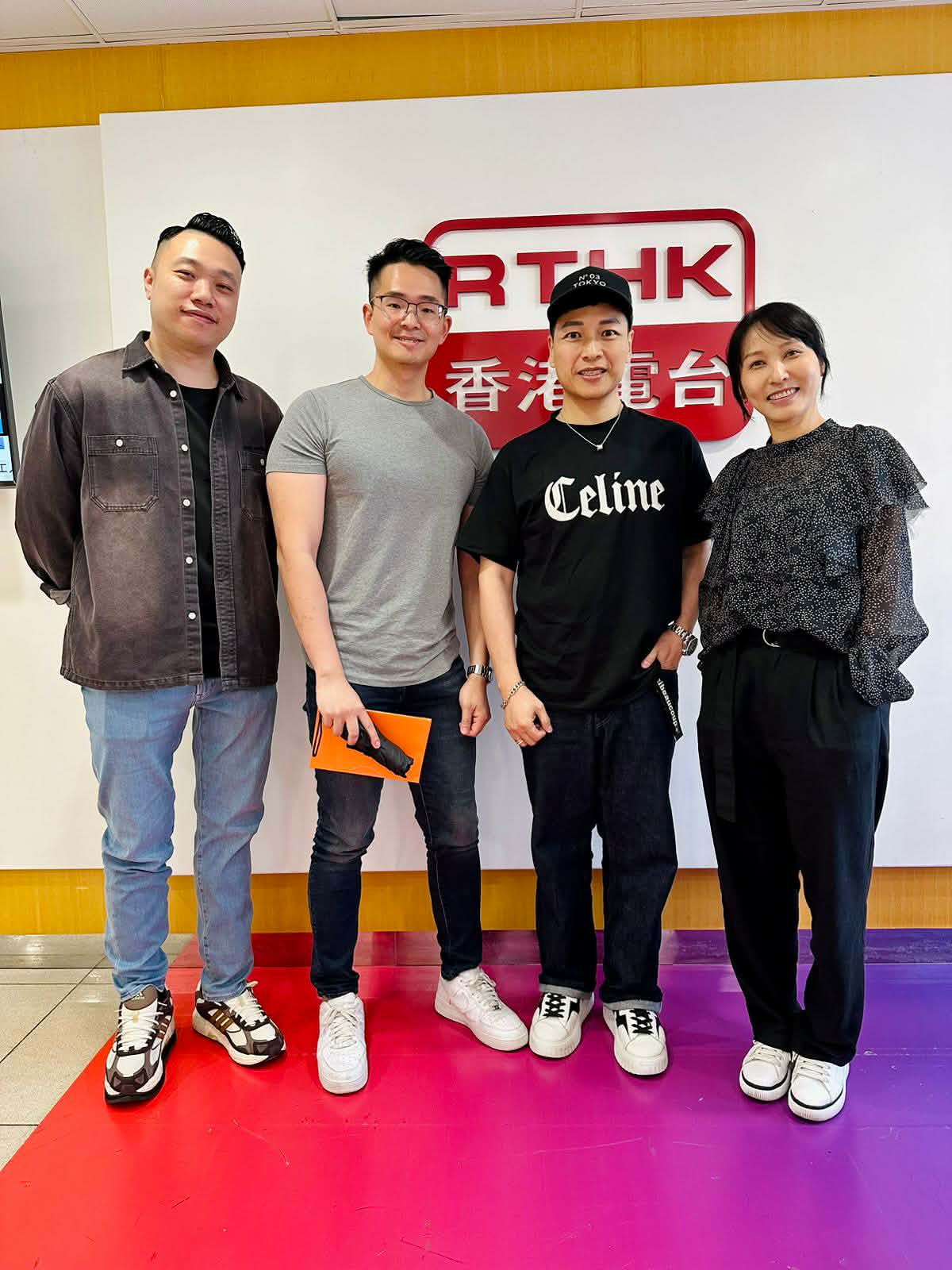
Also, I recently received an invitation from RTHK Radio 1's "HK Lifehouse" for an interview. The interview was broadcast in three parts last week, and I'd like to share it here . Many thanks to the hosts for asking such insightful questions, which led me to talk about many behind-the-scenes stories that I've never shared in previous interviews or online, including my experience working my first job at a convenience store, and some struggles a few years ago when I graduated and had to choose between entering the legal profession or doing Re Pillow. If you're interested, you can revisit the full episodes on the RTHK website via the links below (for your convenience, you can also visit repillow.co/media , where you'll find clickable links to all three episodes)
https://www.rthk.hk/radio/radio1/programme/yolo/episode/1096427
https://www.rthk.hk/radio/radio1/programme/yolo/episode/1096694
https://www.rthk.hk/radio/radio1/programme/yolo/episode/1096931


#205 Met with the Head of Product Development, Hong Kong, of a top company in another industry (10/05/2026)
#207 The Importance of Those Around You (24/05/2026)