

An experienced businessman, whose work and life are now on track, once said that he regretted not keeping more work records when he was young. He didn't record many of his early business ventures, such as when he worked for a period of time in a windowless, 40-square-foot office in an industrial building. At the time, he didn't want people to know that his company was only run by one person, fearing that people might want to come up and chat. So he didn't keep many records. But looking back now, all of these are precious memories, and he also realizes how far he has come.
Therefore, I think it's better to write more records now. Even if I look back on some things later and think my thinking was stupid, they are still true records, and I think they are worth writing down.
Recently, we encountered some obstacles in launching new products, resulting in production delays. These issues tend to interconnect, leading to extra free time lately. From a management perspective, this situation is not ideal because it means we'll be incredibly busy at other times, with various tasks piling up and making things very difficult. In the past year or two, I've noticed that if things seem to be going smoothly or I feel quite relaxed, it usually means something went wrong. Something bad is bound to happen, so be alert. Conversely, if things feel terrible, I'm extremely busy, have many worries and troubles, and find it difficult to resolve, with everything piling up and making me want to give up, it means things will improve—and people often find themselves in this middle ground.
But let's get back to the main point. The idea of being busy one moment and idle the next is not good. From a management perspective, I hope things are busy at a balanced pace. This way, whether it's colleagues, production, or subsequent management and planning, everything can be done at a stable speed. When a bunch of things are rushed together, there will definitely be problems: the shop staff might be too busy and do a poor job, the customers might not like it, and then there might be complaints, and then there will be those complaints to deal with. At the same time, when production is suddenly busy, the products produced may be made incorrectly because of the time constraints, and the workmanship may not be as good, which will create new problems to deal with. The above discussed the downsides of being busy. Conversely, having free time also has its drawbacks. If colleagues have free time, they might start worrying about the company's future, wondering if business is declining, if there's no business, and if it's time to change jobs... As for product output, if there's free time, it means the production line is completely full, so who will pay them? That's also a problem. Therefore, it's best to arrange tasks to be distributed more evenly across different times of the day. In fact, this is true of life in general. If a bunch of things happen at the same time, it's very difficult to handle (for example, if someone has to move, change jobs, or get married all at the same time). It will be very difficult in terms of both time and lifestyle adaptation. Therefore, it's best to do these things one at a time, as there may be unexpected things happening in between (e.g., a broken water heater at home, a health problem, etc.). These things that seem unlikely to happen are absolutely possible. Since these things are unpredictable and uncontrollable, we should try to control the things we can control, such as moving and getting married. Try to spread them out and do them one at a time, so that you have space to deal with any unexpected events.
Similarly, running a business is similar, but you need to consider others in addition to yourself, and there's an extra requirement: "No free time"—free time means the company has wasted resources, and some positions aren't being used efficiently enough. Many large companies have this situation: some people are free, even though they don't really need to be there. My view is this: if some people are working themselves to the bone every day, while another person is always free to come to work and wait to go home, then either the redundant employee should help the other hardworking colleague, or if they're unwilling to help, then the redundant employee should be removed, and their salary redistributed to the other hardworking colleague! That's what I want to achieve: 5 people doing the work of 10, paying the wages of 8. This is how we truly look at the bigger picture, and it's better for everyone. In my case, because of my background and connection to the family bedding business, I've encountered these problems, but they're gradually being resolved. Yes, I said I'd write work records to be honest, and I'll write them very truthfully because I believe it's the right thing to do. Hard-working people deserve a raise, and those who don't work hard shouldn't be kept.
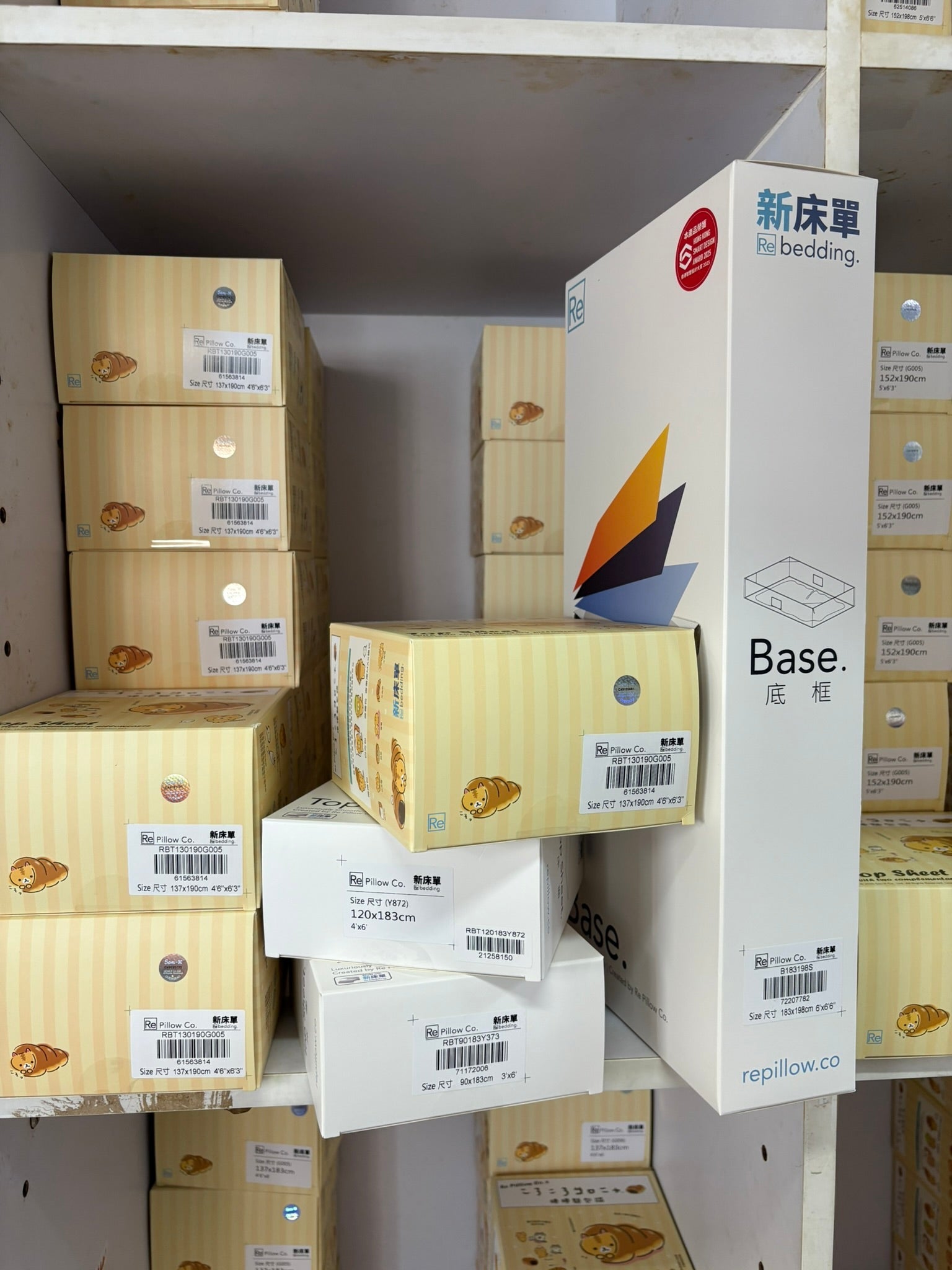
Another point about things that require constant availability: what should we do if unexpected events give us extra time? This time, I used some time to develop a barcode system and do other related tasks. The reason is that we've always relied on human visual inspection for order fulfillment, which sometimes leads to mistakes. Also, with the increasing number of styles, we need a barcode system like in a supermarket, where staff can quickly scan items without having to tap on a tablet. This also reduces the chances of customers receiving the wrong items. This is about making good use of the free time during operations. At the same time, we have also started to invite some customers who left their information earlier and hope to order special Re Bedding sizes to start trying to make a trial order, to make good use of the spare time in production, and to test whether there will be any difficulties in execution, etc., in order to prepare for the next step of possibly making the order plan public for the public to use.
Management is a complex subject, and I'm still a novice. However, the above is just a record of what I've been doing lately.


#166 Thoughts on Entering the Mainstream Market (10/08/2025)
#168 A Few Gains (24/08/2025)